
Name the surface.
Identify wood, metal, masonry, or another material where known. Share the existing finish and intended use rather than assuming one coating suits every surface.
Additional Services
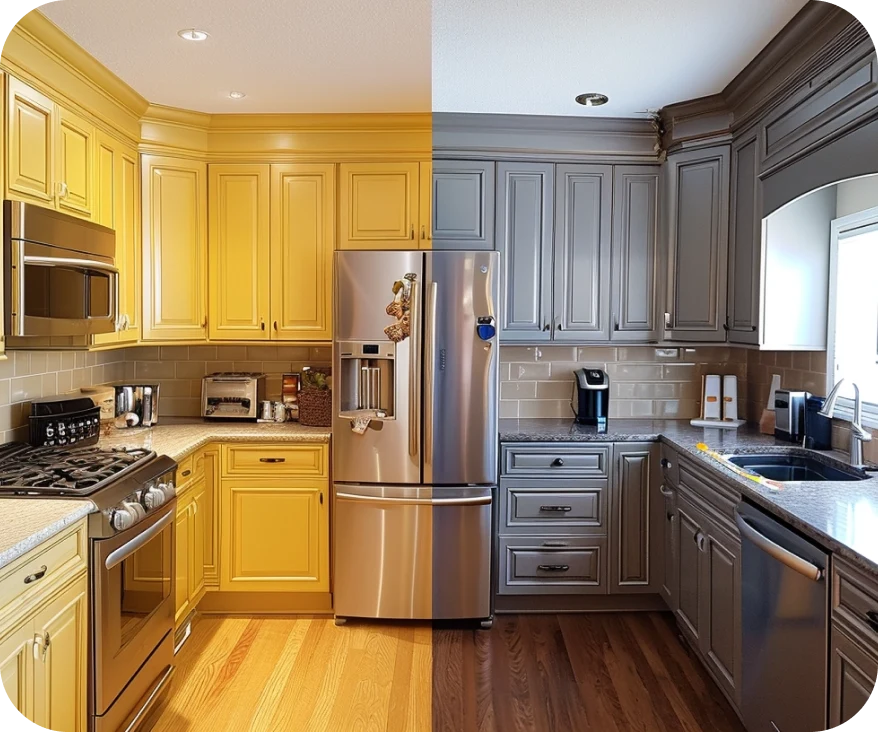
Cabinets, floors, an unusual surface, or a few extra details? Add photos and notes so we can review your project instead of guessing.
A Palette From This Place
Start With The Details
Describe the surface and quantity, then add photos of the details you want reviewed.
Good Details Make A Better Brief
Cabinets, unusual finishes, and cosmetic preparation can involve very different materials. A useful request starts with what is there and what you want to change.
A reported project choice, not a property-value increase.
2026 U.S. Houzz Kitchen Trends Study: 50% of homeowners making partial cabinet upgrades refinish cabinet exteriors. This is not 50% of all homeowners. The overall survey covered 1,780 U.S. adult homeowner Houzz users, fielded July 6–30, 2025, with 2025–26 kitchen projects; the partial-upgrade subgroup size is not published. Not a financial return or a Pig Painting customer result.
Identify wood, metal, masonry, or another material where known. Share the existing finish and intended use rather than assuming one coating suits every surface.
Manufacturer preparation guidance stresses a clean, solid, dry starting surface. Include photos of loose coatings or visible damage so preparation can be reviewed.
Sherwin-Williams recommends a small prepared test area to check adhesion and compatibility before a full application. Product instructions and the agreed scope determine the approach.
Manufacturer guidance reviewed November 17, 2026. Specific products and materials may need different preparation. The additional-work category is a request for review, not a claim that every specialist trade or repair is offered.
A little clarity before you start.
Describe the location, surface, quantity, existing condition, and result you want. Photos with both a close-up and a wider view help connect the detail to the property. Related work is reviewed for scope; adding a request does not mean every type of repair or specialty trade is offered.
Yes. Keep related requests in the same estimate and identify which room or exterior area they belong to. This helps the company review preparation and sequencing together. Each item still needs to be included in the written scope before it is approved for work.
The painting scope covers minor cosmetic patching, not drywall installation or structural repair. Explain the size, location, and visible condition of the area and add photos. Mention recurring cracks, staining, or moisture concerns so they can be reviewed rather than covered by an assumed paint-preparation allowance.
Identify the material, existing coating if known, and how the surface is used. Share the look you want and any product preferences without guessing compatibility. The company needs to review preparation and product suitability before confirming whether the requested finish fits its scope.
No. Enter the quantities or dimensions you know and leave uncertain values blank. A clear location, description, and photos are more useful than invented measurements. You can start with an idea and clarify details before the company prepares the final scope.
No. The request is reviewed first. The agreed proposal or additional-work order defines what is included, along with the relevant pricing and timing, before the work is authorized. If your needs change, discuss the change rather than assuming it is covered by an earlier request.