
Expect an appearance change.
CMHA notes that sealers can enhance paver color, with products offering different levels of sheen. A suitable test area helps evaluate the intended finish.
Paver Sealing
From the driveway to your poolside retreat, sealing starts with understanding the surface and any existing finish. We’ll review product suitability and preparation.
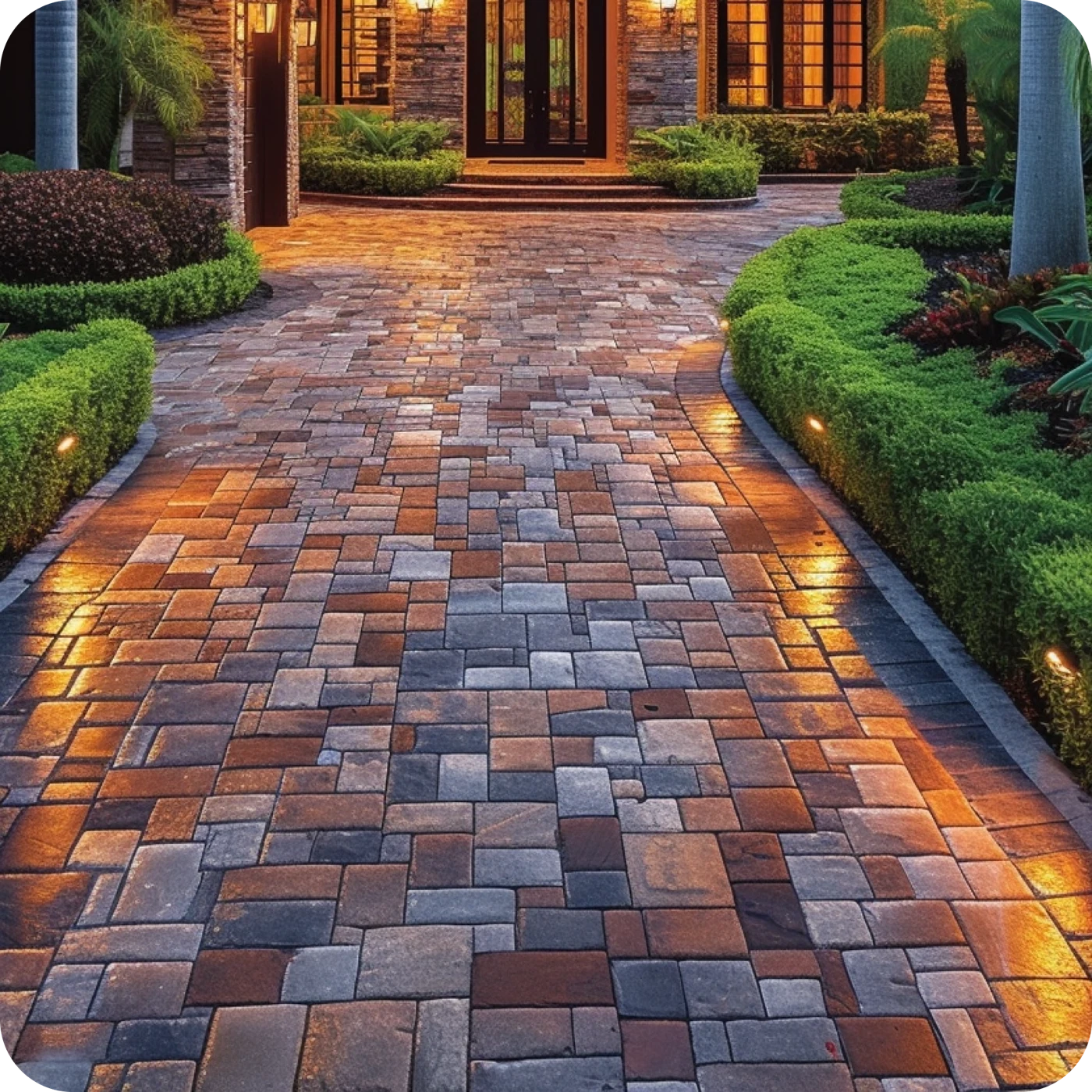
A Palette From This Place
Start With The Details
Include the surface area, previous sealer if known, and areas with stains or wear.
Understand The Finish First
A sealer can change how a paver looks. Review the material, existing sealer, and intended appearance before choosing the next treatment.
A planning range to discuss, not a fixed deadline for every paver or driveway.
CMHA maintenance guidance, November 14, 2025, gives a 3–5-year sealer reapplication interval. This is industry planning guidance, not a measured study, universal deadline or guaranteed coating life. Follow product instructions and assess exposure and actual condition.
CMHA notes that sealers can enhance paver color, with products offering different levels of sheen. A suitable test area helps evaluate the intended finish.
CMHA describes efflorescence as a salt deposit that may affect appearance without affecting structural performance. It should not be confused with every stain or defect.
Share known sealer details and photos of uneven, peeling, or cloudy areas. Cleaning, compatibility, and the next coating need review together rather than a guessed overcoat.
Technical guidance reviewed November 17, 2026. The appearance depends on the paver, existing condition, and chosen product. These facts are not a promise that sealing repairs structural damage or removes every stain.
A little clarity before you start.
List pavers, pool-deck areas, and any separate wood-deck request in the walkthrough. Identify each material and location rather than treating them as one surface. Different materials need their own preparation and finishing approach, and the company reviews which work belongs in the agreed scope.
Provide the product name and application date if you know them. Otherwise select unsure and add photos of gloss, peeling, cloudiness, stains, or uneven areas. Existing sealer can affect preparation and compatibility; do not assume a new product can simply be applied over it.
Tell us about dirt, staining, and the existing finish, and include cleaning as a related request if needed. Preparation, surface moisture, and the selected product must be considered together. The company confirms the sequence and scope before work rather than treating sealing as a stand-alone cosmetic cover-up.
Describe the look you want and share reference photos or known product preferences. The material and existing finish affect the available result. Screen images are not exact samples, so review the intended appearance and suitability before approving the proposal; no finish or sheen is guaranteed by the initial request.
Mention standing water, drainage concerns, heavy use, vehicles, pool access, and any damaged or uneven areas. Take photos from safe positions. Tell the company which areas must remain accessible so preparation, protection, and any restrictions on use can be discussed before scheduling.
That depends on the preparation, product, surface, and conditions. Do not assume a fixed same-day return to use. Ask the company to confirm the relevant drying or cure guidance and any pedestrian, vehicle, or pool-area access restrictions as part of the agreed plan.